September, 2018
Interview with founder of Danish music blog Musikblog.dk
Kjartan Stolberg

Friday night. We’re at a Chess event in Copenhagen.
Chess is a game that has the ability of truly connecting people; people of all shapes, sizes, and types.
This truth is indeed confirmed by the crowd being present: to the left you see young hands holding a soda, to the right grey haircuts and old-fashioned glasses, in front of the little stage tattoos and provocative t-shirts, and yet in another area long hair and elegant heels.
It is in this captivating scenery that I have the pleasure of meeting Kjartan Stolberg. A true believer in music, a passionate, dedicated, “excitement-contagious” geek; the kind of person who knows an enormous amount about his field and makes you want to know it too. (Also the one who wears sandals to a Chess event at a night club!)
Hearing about Kjartan’s various projects, I cannot help but ask him for an interview - an invitation that he accepts with both an enthusiastic “ja!” and a friendly handshake.
Welcome to the words of Kjartan Stolberg.
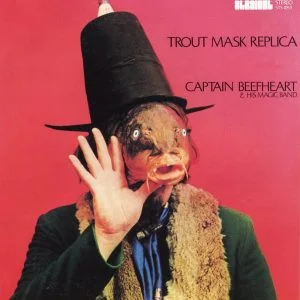
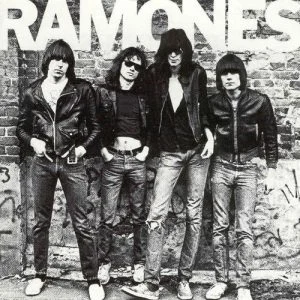
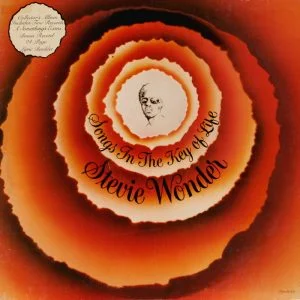
You are currently reviewing every single album from the Rolling Stone list (the 2003-edition) of the 500 best music albums of all time. What made you start this indeed very dedicated, ambitious project?
When I was in my mid teens, I played a lot of video games, and I played some of them so much that I’d get tired of their soundtracks. I wasn’t that into a lot of what was played on the radio, so I pulled up a list of the best songs ever – that was the Rolling Stone list of the 500 greatest songs of all time. Listening to that list gave me a further interest in music than before, and for a while, I spent a lot of time digging into e.g. indie/alternative music, classic rock and hip hop, mainly through YouTube videos. But some months after having finished listening to that list of the 500 greatest songs, the Rolling Stone list of the 500 greatest ever albums started getting alluring. So I started visiting the library every so often to pick up these records and listening to them in order.
Unsurprisingly, this took some more time than just listening to 500 songs, so after a while I felt the need to share my experiences with the albums. It started as small facebook statuses about each album, but these statuses slowly took the shape of fully fleshed out reviews, as I had more and more to say about each album. Therefore I started a website where I could write and publish those reviews. After doing that, I started the project completely over and rereviewed all of those albums I had only covered with short facebook posts.
You have 30 albums left (as of this writing) and expect to publish your review of the last one this winter. So far, what has this project brought you; what has been the most valuable thing you’ve learned or been inspired by?
For one, it has brought me a job – other than reviewing these older albums on my blog, I also review new records for Soundvenue.com. But in terms of what I’ve learned, I think it has made me a way better writer. If I go back and read my old reviews, it’s apparent that I wasn’t as good at expressing myself.
I also think this project has taught me a lot about music history. While I firmly believe that there isn’t necessarily an overlap between a piece of art being historically significant and being enjoyable, it is important to take history into account when discussing art. Because history is in my opinion just as important in shaping a piece of art as the artists themselves are.
But most importantly, I’ve learned that getting better is a continuous practice, and that is some of what keeps me going. For every review I write, I learn something about myself and my relationship to music.
Do you remember the first time you realized the “power” of music? In other words: when did your love and fascination of music begin?
Yes – and no. I think it happens gradually, and to some extent, I think I’m still realizing the power of music. I distinctly remember when I was around ten or eleven years old, hearing the song ‘Ahr Dér’ by the Danish hip hop group MC Einar. I was really fascinated by the way they told stories through rap lyrics – filling each episode with witty details but also keeping the song catchy and the narrative easy to follow.
“Weird Al” Yankovic is also an important figure in my growing appreciation of music. I started listening to his songs mainly due to their humourous lyrics, but after a while, I found out just how much effort he puts into his stuff, both sonically and lyrically. He doesn’t just fill his songs with jokes, he tightly structures them to be able to contain as much comedic content as possible, all while the instrumentation often pays tribute to musicians that he admires.
According to you, what will music look like in, say, 10 years?
This is a difficult question, because it’s even almost impossible just to describe what music looks like today – so many interesting movements are going on right now, influencing each other, reworking old ideas into brand new ones. There is so much music out there that one person can’t even be aware of more than a fraction of it.
But if I’ll make one prediction, it is that the musical mainstream will die out. With streaming at our fingertips, it’s easier than ever to find music that suits your personal taste. We’re already slowly seeing this happen. Outside of hip hop, it’s a long time since we’ve seen any new world-conquering superstars that everybody knows. And even if we look at hip hop, I think it’s hard to say that Post Malone, Cardi B or 6ix9ine have become household names in the same way that Adele, Justin Bieber or Katy Perry did less than a decade ago.
Do you believe music will exist forever?
I think music, just like any other form of art, depends on the existence of human culture. But I feel certain in believing that as long as there are humans, there will be people who will devote themselves to the art of music. Music, similarly to e.g. philosophy and visual art has emerged in many prehistoric cultures independently. People have always had a need to express themselves, and for that purpose, music is a powerful tool.


Please mention four of your all-time favorite musicians. In what way have they made an impact on you as well as the world?
I guess my picks aren’t super unique to me, as they’re in general some of the most revered musicians of the past century, but if I had to boil my musical taste down to four individual musicians, I’d choose Miles Davis, Paul McCartney, Björk and Kanye West – four very different artists who have however all marked themselves as supremely talented and influential.
First off, Paul McCartney is an immensely skillful songwriter, who both with The Beatles, with Wings and as a solo artist has written some of the greatest pop melodies ever. He has a knack for making simple compositions seem grand and making complex songs seem effortlessly crafted. So much pop rock prior to Lennon and McCartney only utilized a pretty limited scope of e.g. instrumentation and chord progressions – this includes early Beatles songs as well. But together with the rest of his group, McCartney raised the ambitions for what pop music could achieve. Compared to the other Beatles members, nobody continued setting grand ambitions for pop music in the same way as McCartney did. If anybody has made me appreciate the craftsmanship of good pop music, it’s Paul.
Kanye West is, needless to say, a polarizing figure, in many circles more known for his antics as a celebrity than for his actual music. But the man is a ridiculously gifted producer, and he can create an album experience like few others are able to. With records such as ’The College Dropout’, ’My Beautiful Dark Twisted Fantasy’ and most recently ’Kids See Ghosts’, he has pushed boundaries for how you can express yourself through hip hop. In addition to making amazing albums, he has managed to make his whole public persona a piece of art in some sense. Whenever he opens his mouth, wears a piece of clothing or tweets something, the world turns to look, judge and engage themselves with his statements. I should note that I am in no way a fan of his current endorsement of Donald Trump, in fact I find it very frustrating. But watching him go through his political journey is still fascinating – philosophically, he is digging his own grave, and witnessing it affects me as much as a Shakespearean tragedy.
Björk is yet another artist constantly pushing the envelope. However, unlike McCartney and West, she does it without any regard to pop appeal. Not that she is the very most experimental musician ever or anything, as there obviously is some pop influence on most music she’s ever produced. Yet I’ve still heard people say, after seeing Björk live, that she only made the performance to please herself rather than the audience. I found that statement hyperbolic, yet I think there is a grain of truth to it. Because even though I was a part of the audience, and I loved every part of her perfomance, Björk only plays by her own terms, and thus she has almost transcended being an entertainer – she moreso plays the role of an ethereal being at this point. She almost singlehandedly started a renewed interest in contemporary Icelandic music back in the 90’s, but she’s never looked back – she has in stead continuously evolved and found new ways to captivate listeners such as me, whether it’s with grandiose musical concepts such as ’Medúlla’ or deeply personal projects such as ’Vulnicura’ or ’Utopia’.
Finally, Miles Davis has in many respects had the same impact on me as he has had on the music world at large. He has introduced me to so many different takes on jazz music, always in a thrilling and exciting way. His massive discography spans over a diverse field of styles, but he consistently made sure to inject his music with his own personality. There’s no mistaking when you’re listening to a Miles Davis recording, no matter which of the many innovative eras of his career we’re looking at.